Italy’s Role in the Arctic: From the Dolomites to Polar Diplomacy
From Dolomite glaciers to satellite observation: how Italy connects research and diplomacy in its Arctic engagement.
Sources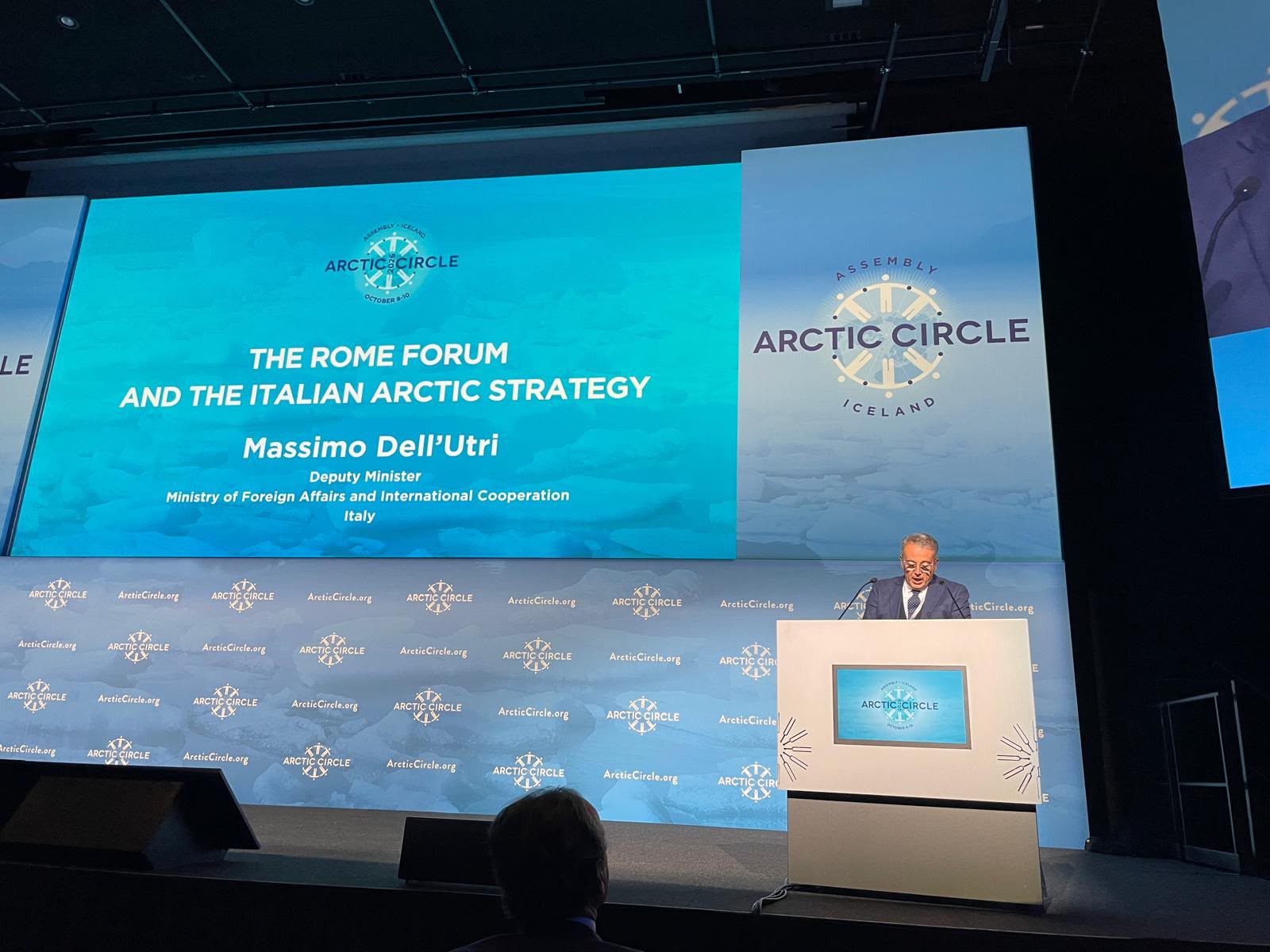
Italy in Reykjavík
Italy’s Arctic ambitions took centre stage in its contribution to the 2026 Arctic Circle Assembly in Reykjavík. Massimo Dell’Utri, Undersecretary of State for Foreign Affairs and International Cooperation, presented an approach connecting scientific research, environmental protection, security and international cooperation. His participation placed Italy’s research capabilities within a broader discussion about the region’s future.[1]
“The challenges of the Arctic require expertise, responsibility and an international perspective,” Dell’Utri wrote in his public account. His statement places scientific expertise and international cooperation at the centre of Italy’s Arctic engagement.[2]
From the Dolomites Northward
The scientific connection begins close to home. Italian institutions study the changing cryosphere—the Earth’s frozen environments—in both Alpine and polar settings. A study by the CNR’s Institute of Polar Sciences and Ca’ Foscari University of Venice documented a 56 per cent reduction in the area of the Dolomite glaciers examined between the 1980s and 2023. Researchers combined historical aerial photographs with newer drone and laser measurements to reconstruct the changes.[3]
Research on the Marmolada also shows the practical importance of this work. Teams involving the universities of Parma and Padua and the National Institute of Oceanography and Applied Geophysics use ground-based and drone-mounted radar to investigate the glacier’s internal structure and potential instability. Such investigations connect climate research with the assessment of hazards affecting people and infrastructure.[4]
A Shared Climate Challenge
Glacier retreat in the Dolomites and ice loss in the Arctic are connected through a warming climate, although local conditions and rates of change differ. In the Arctic, declining reflective sea ice exposes darker ocean water, increasing the absorption of solar energy and reinforcing warming. Italian-led research in Svalbard investigates these processes and their atmospheric effects.
The connection also concerns the information held within ice. Snow and ice layers preserve evidence of earlier environmental conditions; melting can alter those records. Discussing research in Svalbard, CNR scientist Andrea Spolaor warned that “the seasonal climate signal has been lost.” The finding illustrates why preserving and interpreting glacier archives matters alongside measuring their physical retreat.[6]
For Italy, research in Alpine and Arctic environments therefore offers complementary perspectives on a common challenge. Comparing observations can help researchers understand how different frozen landscapes respond to warming and what knowledge may disappear as the ice changes.

A Lasting Presence
Italy’s Arctic engagement rests on established institutions. The Dirigibile Italia research base in Svalbard opened in 1997, and Italy became an Observer in the Arctic Council in 2013. Scientific expertise and participation in collaborative work provide practical channels through which a non-Arctic country can contribute.[7]
The Arctic policy document presented in Rome in January 2026 gives this involvement a renewed political framework. Its relevance will depend on sustained support for research and cooperation, and on how effectively national ambitions respond to the priorities of Arctic partners.[8]

Seeing Change from Space
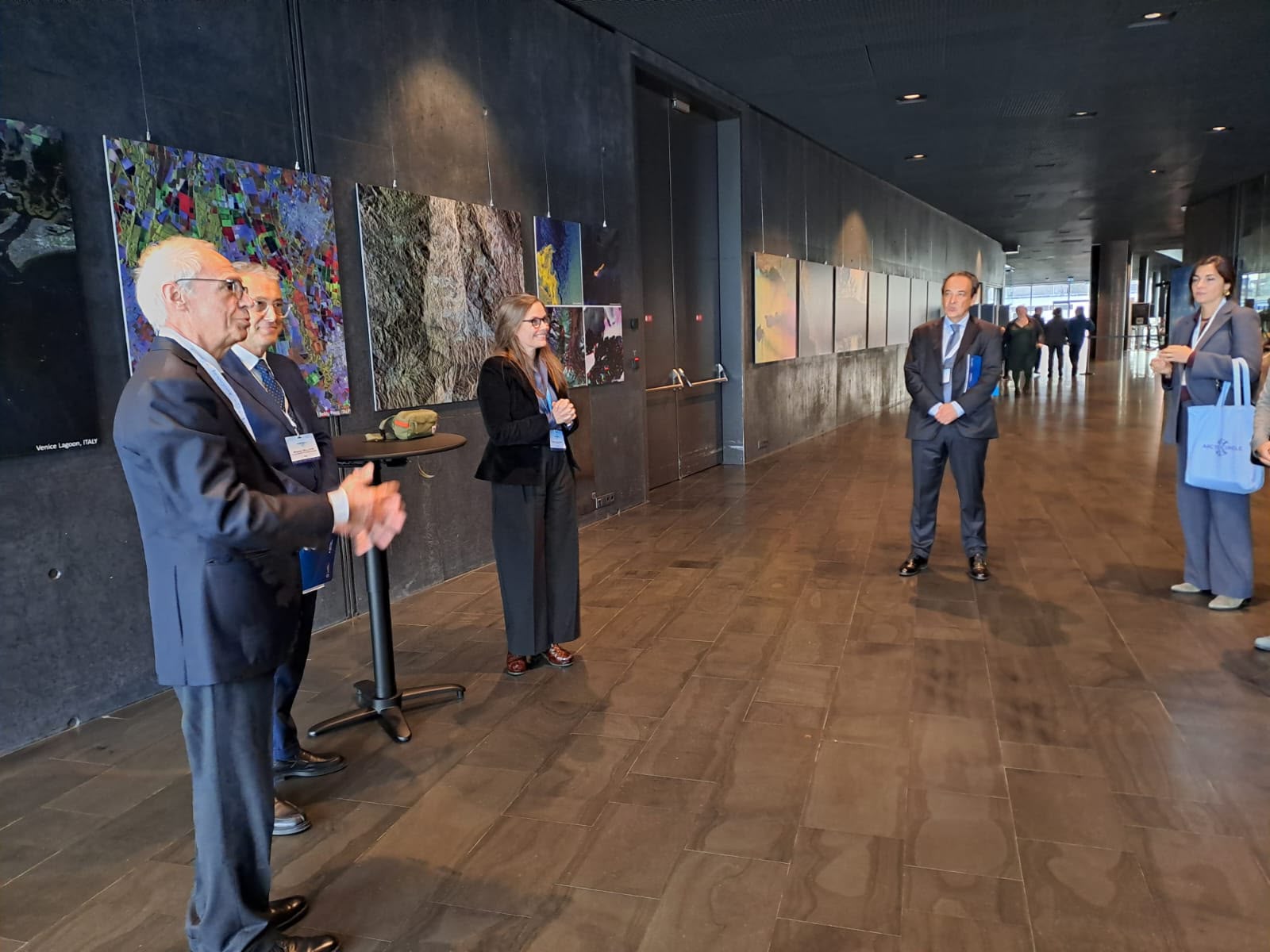
Dell’Utri’s Reykjavík visit also highlighted Italian Earth-observation technology. Together with Ambassador Andrea Cavallari, he inaugurated Looking Beyond, an exhibition featuring 16 images from the COSMO-SkyMed satellite constellation. The Italian Embassy described the exhibition as an opportunity to consider environmental change and the contribution of satellite observation.[9]
According to the Italian Space Agency, COSMO-SkyMed’s radar instruments can acquire imagery in darkness and through cloud cover. Applications include monitoring coasts and maritime activity. These capabilities complement field measurements, providing observations across areas that can be difficult to reach.[10]
Diplomacy into Practice
Earlier in the year, the Arctic Circle Rome Forum brought more than 500 participants from over 40 countries to the CNR’s headquarters. Its discussions connected scientific cooperation with diplomacy, security and the future of polar regions.[11]
Together, the Rome forum, the Reykjavík contribution and Italy’s research programmes show the range of its engagement. The strongest measure of success will be continuity: dependable observations, accessible knowledge and partnerships that involve northern communities in defining priorities. From the Dolomites to Svalbard, Italy’s scientific experience gives it a substantive contribution to make—and a responsibility to sustain it.
At the Assembly
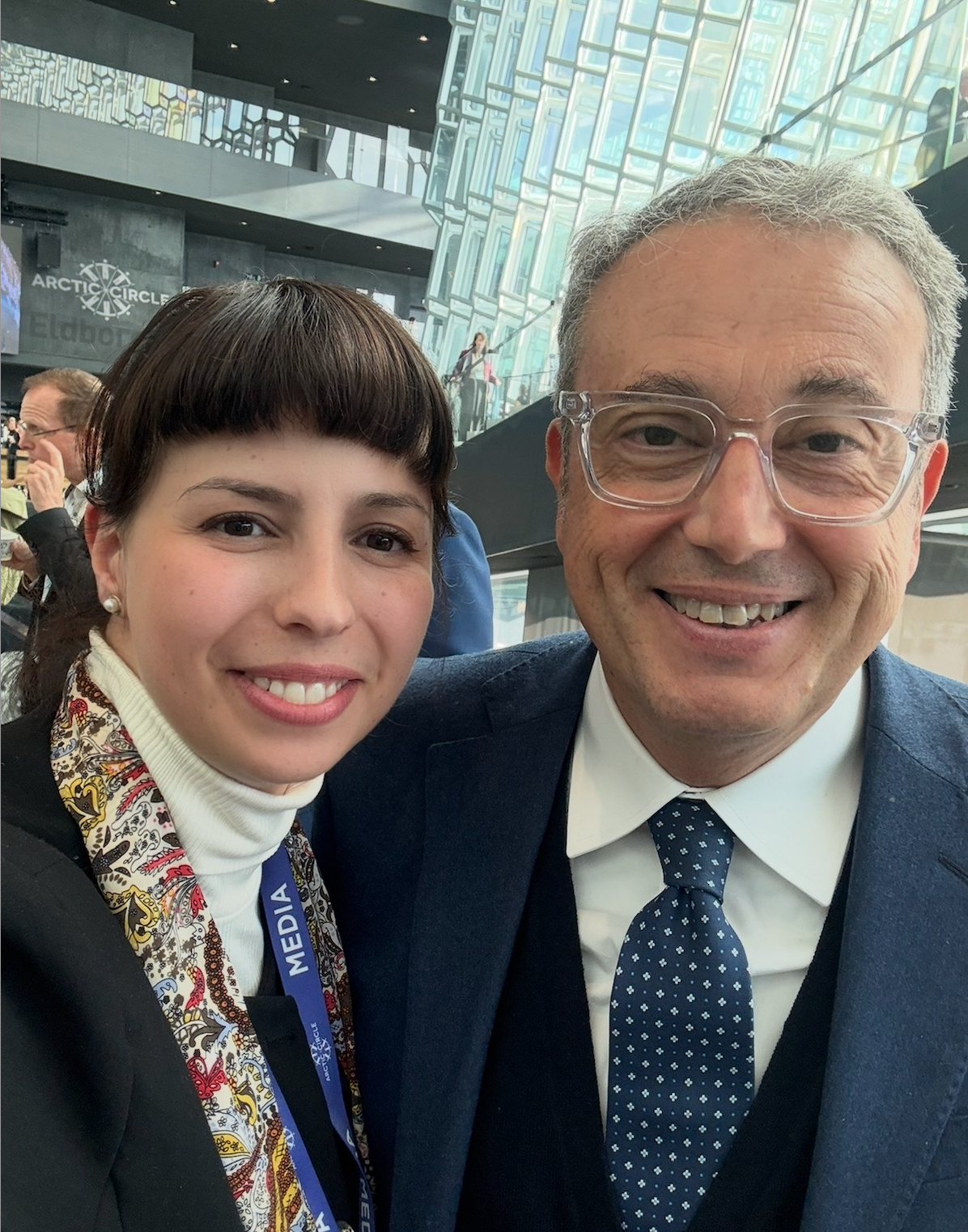
During the Arctic Circle Assembly 2026 in Reykjavík, I spoke with Massimo Dell’Utri, Italy’s Undersecretary of State for Foreign Affairs and International Cooperation, about Italy’s Arctic engagement and the connections between Alpine and polar research.
Sources and further reading
- MAECI · Dell’Utri at the 2026 Assembly
- Massimo Dell’Utri · Public account / Öffentlicher Bericht
- CNR · I ghiacciai delle Dolomiti stanno scomparendo
- Università di Parma · Marmolada research
- CNR · Saving the ice memory of Svalbard
- CNR · Climate change, the Arctic is losing its memory
- Arctic Council · Observer Italy
- MAECI · Italian Arctic policy
- Ambasciata d’Italia a Oslo · Assembly and Looking Beyond
- ASI · COSMO-SkyMed
- CNR · Arctic Circle Rome Forum