The clock is ticking at the North Pole
Original title: Die Zeit tickt am Nordpol
A new forum is needed to address military and security-policy questions in the Arctic region.
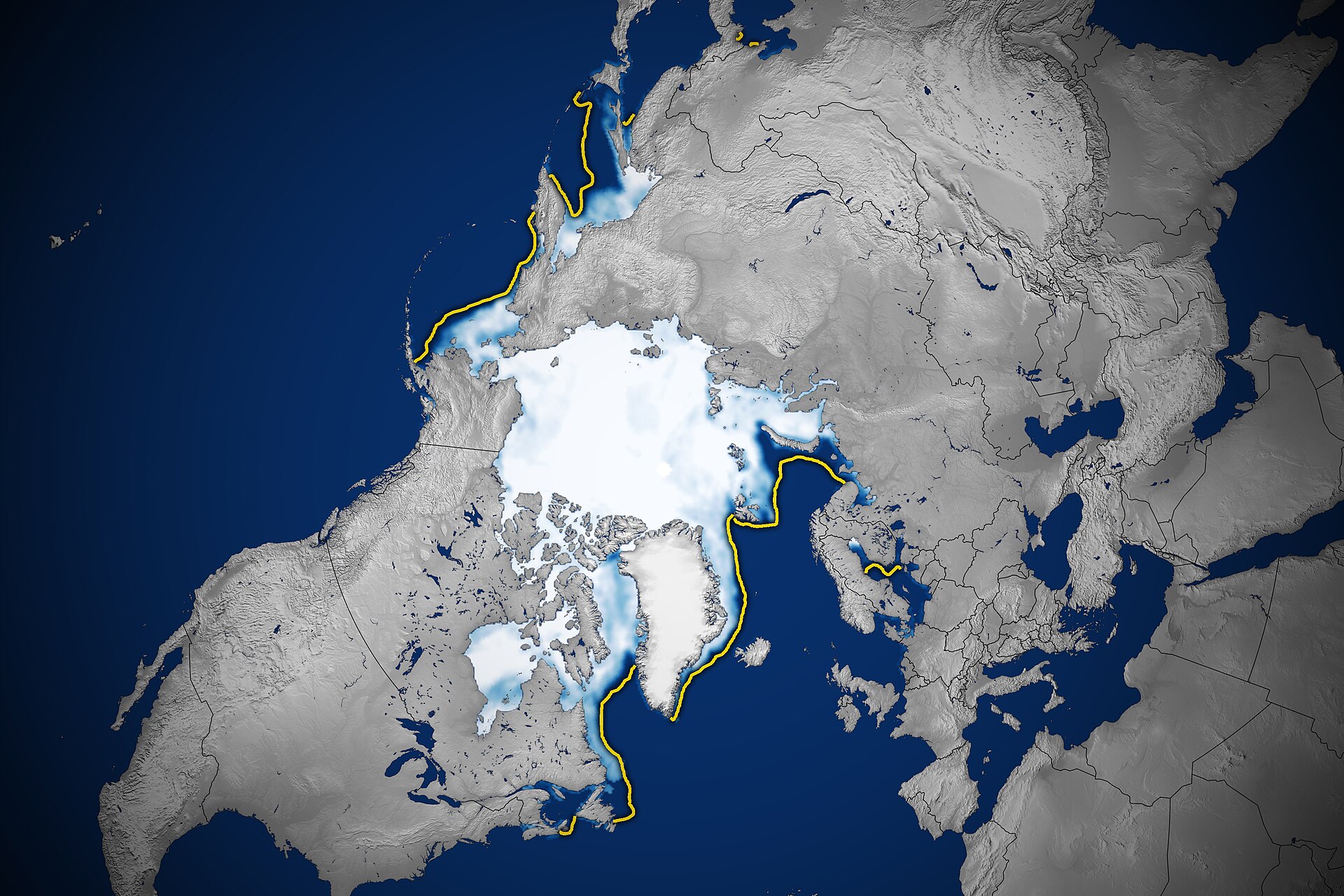
The international structures that have helped address many Arctic problems through negotiation and cooperation are inadequate for the military and security challenges brought about by climate change.
Decades of diplomacy have fostered forums such as the Arctic Council, which regularly brings together stakeholders—including Arctic and non-Arctic government representatives, Indigenous leaders and business interests—to reach agreement on issues such as search and rescue, oil pollution and scientific cooperation. Another gathering, the Arctic Frontiers conference, concludes on 30 January in Tromsø, Norway. Other meetings, such as Arctic Circle, Arctic Dialogues and the Arctic Shipping Forum, provide further opportunities for debate.
Such meetings and institutions have been less successful, however, in addressing military operations in the region. This is partly because the presence of armed forces in the Arctic is often linked to high-stakes geopolitical issues, such as Russian activities in Ukraine or the US position on freedom of navigation. This discussion is therefore deliberately avoided.
The Arctic Council, for example, explicitly avoids any discussion of military affairs. The Arctic Coast Guard Forum focuses on safety, environmental protection, law enforcement and operational response—but not military operations.
An Arctic Security Forces Roundtable and a limited number of bilateral or multilateral Arctic security exercises do exist. These offer some opportunities for engagement, but lack the consistency or clear mandate of non-military Arctic cooperation. Moreover, the Security Forces Roundtable has excluded Russia since 2014, when it seized Crimea and began military activities in Ukraine.
Creating a regular, inclusive forum for discussing defence issues is crucial for the Arctic, where the greatest short-term security risk may be military miscalculation. Resource wars are remote and unlikely; most potentially profitable ventures take place in undisputed areas. Investors and insurers can weigh potential profits against risks on that front.
There are, however, at least two scenarios that could lead to dangerous military miscalculations:
One is a race to militarise the Arctic, bringing diplomatic consequences and potentially dampening emerging economic prospects, while increasing the likelihood of military assets coming into close contact. The other is a perceived gap in security and governance—fuelled by a potential increase in ship collisions, illegal fishing and demonstrated limits to search-and-rescue capacity—which opens the door for countries such as China to justify expanding their own regional capabilities.
The first scenario represents too much security; the second could arise from too little. Both are equally dangerous, and changing conditions could tip the balance either way. Either could begin with non-adversarial intentions and develop a snowball effect, leading to greater military activity and less room for dialogue and cooperation. Both are avoidable, but only if opportunities exist to achieve mutual understanding, if not more formal security cooperation.
What kind of forum would meet this need? There are three existing options, none of which is currently ideal.
First, the Arctic Security Forces Roundtable could be modelled more closely on the Arctic Council and Arctic Coast Guard Forum, emphasising inclusivity, open and regular multilateral dialogue, and the search for common policy ground. Given its explicit military focus and direct approach to dialogue, this is probably the best option. The biggest obstacle may be persuading the United States to accept Russian and, perhaps, Chinese membership.
Second, the Arctic Council or Arctic Coast Guard Forum could extend its remit to region-specific Arctic military issues. Security questions are so sensitive, however, that including them could undermine these organisations’ effectiveness in carrying out their existing missions.
Third, forums such as Arctic Circle—and perhaps smaller gatherings such as the forthcoming Arctic Frontiers meeting—could place greater emphasis on less formal Track II diplomacy. This may already be happening to some extent. Arctic Circle, in particular, attracts diverse and sometimes high-level official government participation. It is unclear, however, whether such diplomatic back channels could be scaled up sufficiently in a future Arctic where issues arise more frequently and unfold more rapidly.
Dialogue on sensitive Arctic military issues is becoming increasingly important if either a heavily militarised scenario or a security vacuum is to be avoided. A war in the Arctic would have no winner. Whoever emerged militarily on top would be left with the costly, time-consuming task of ensuring security in a region too devastated to enjoy the modest economic benefits that greater navigability might otherwise offer.