A new Silk Road through the eternal ice
Original title: Neue Seidenstrasse am ewigen Eis
China’s ambitions are far-reaching. Even the North Pole is now in its sights.
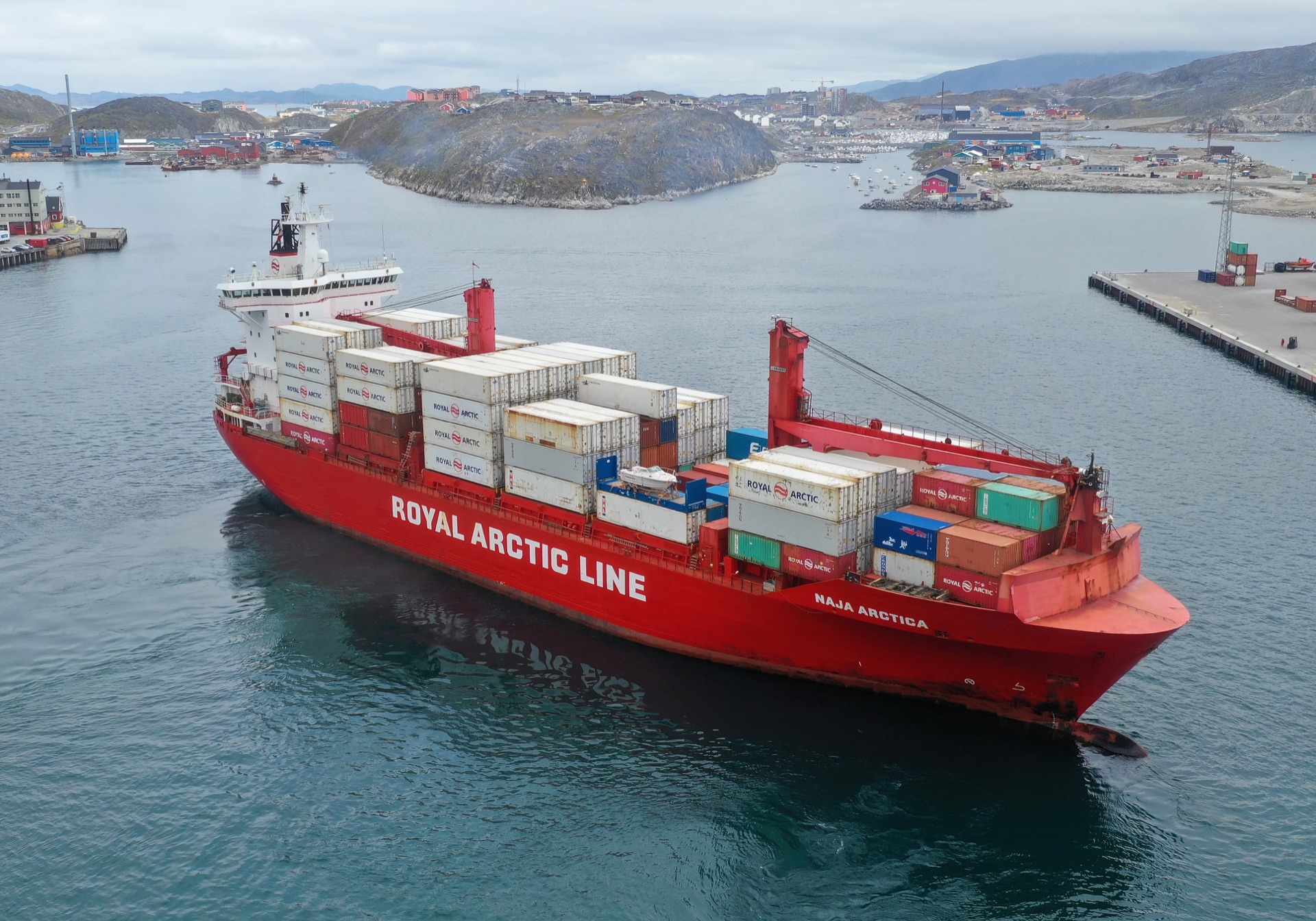
Will Arctic governance soon be in Chinese hands? According to forecasts in the ‘Blue Paper’, an academic study published by China’s Social Sciences Academic Press and the Qingdao-based Ocean University of China, that could soon be the case.
Beijing is said to be no longer merely a ‘rule follower’, but above all a ‘rule maker’ in the Arctic, meaning its role in the region’s global governance can no longer be ignored. China has clearly articulated this ‘governance philosophy’ and is taking the initiative in shaping the agenda for global governance in the Arctic.
According to the study, China is geographically a ‘near-Arctic state’. Natural conditions and changes in the Arctic therefore directly influence China’s climate system, ecology and environment, in turn affecting its economic interests in agriculture, forestry, fisheries and shipping.
Beijing is well aware that the countries bordering the northern polar region have serious concerns about China’s active initiative. It maintains, however, that preserving regional security and promoting world peace are foremost among Chinese interests.
Dong Yue, the Blue Paper’s editor-in-chief and deputy head of the Ocean University of China’s law school, told the Global Times that the paper’s call for calm meant China would not take ‘radical’ action. The paper states that China accepts the principle of Arctic states’ sovereignty and does not intend to violate their fundamental rights or restrict the Arctic Council’s decision-making powers. China has been a Council observer since 2013. The ‘China threat theory’ could merely indicate that other countries would unfairly raise barriers for Chinese companies in order to keep Arctic development to themselves, Zhang Xia, director of the Shanghai-based Polar Strategy Center at the Polar Research Institute of China, told the Global Times. Zhang emphasised that China’s Arctic resource development would take place exclusively through trade and cooperation with other Arctic countries. According to the Blue Paper, regional security is closely linked to China’s environmental, military, scientific and, particularly, energy security. Arctic land areas cover roughly eight million square kilometres under the sovereignty of Canada, Denmark, Finland, Iceland, Norway, Russia, Sweden and the United States. The Arctic Ocean covers more than twelve million square kilometres, where coastal and other countries share maritime rights and interests under international law.
Polar Silk Road
The so-called Polar Silk Road will be a new source of growth for China, and its involvement in regional affairs will advance the integration of Eurasian economies, the Blue Paper also stresses. Chinese Arctic expeditions began in the 1990s; nine had been completed by 2018.
This Arctic trade route is not merely a new shipping lane crossing the Arctic Circle: it also connects three major economic centres—North America, East Asia and Western Europe. China aims to help save up to US$127 billion a year in transport costs once the route is fully operational.
Chinese companies are encouraged to participate in infrastructure development along these routes and undertake commercial voyages in accordance with the law, according to a white paper entitled ‘China’s Arctic Policy’, published in January by the State Council Information Office. Existing Arctic shipping routes remain only partially used because of the region’s extreme climate and vessels’ icebreaking requirements. The Polar Silk Road will nevertheless provide China with a channel for exploring new energy resources and facilitate ‘overseas energy stations’—in other words, in the Arctic region.
With 13 per cent of the world’s undiscovered oil and 30 per cent of its undiscovered natural-gas reserves, the Arctic’s potential resources could make it a frontier for rapid economic development in the twenty-first century.